
THE ENVIRONMENTAL INJUSTICE
OF CLOTHING
PRODUCTION
IN INDIA
Words by CJ Clouse 06.09.2022, London
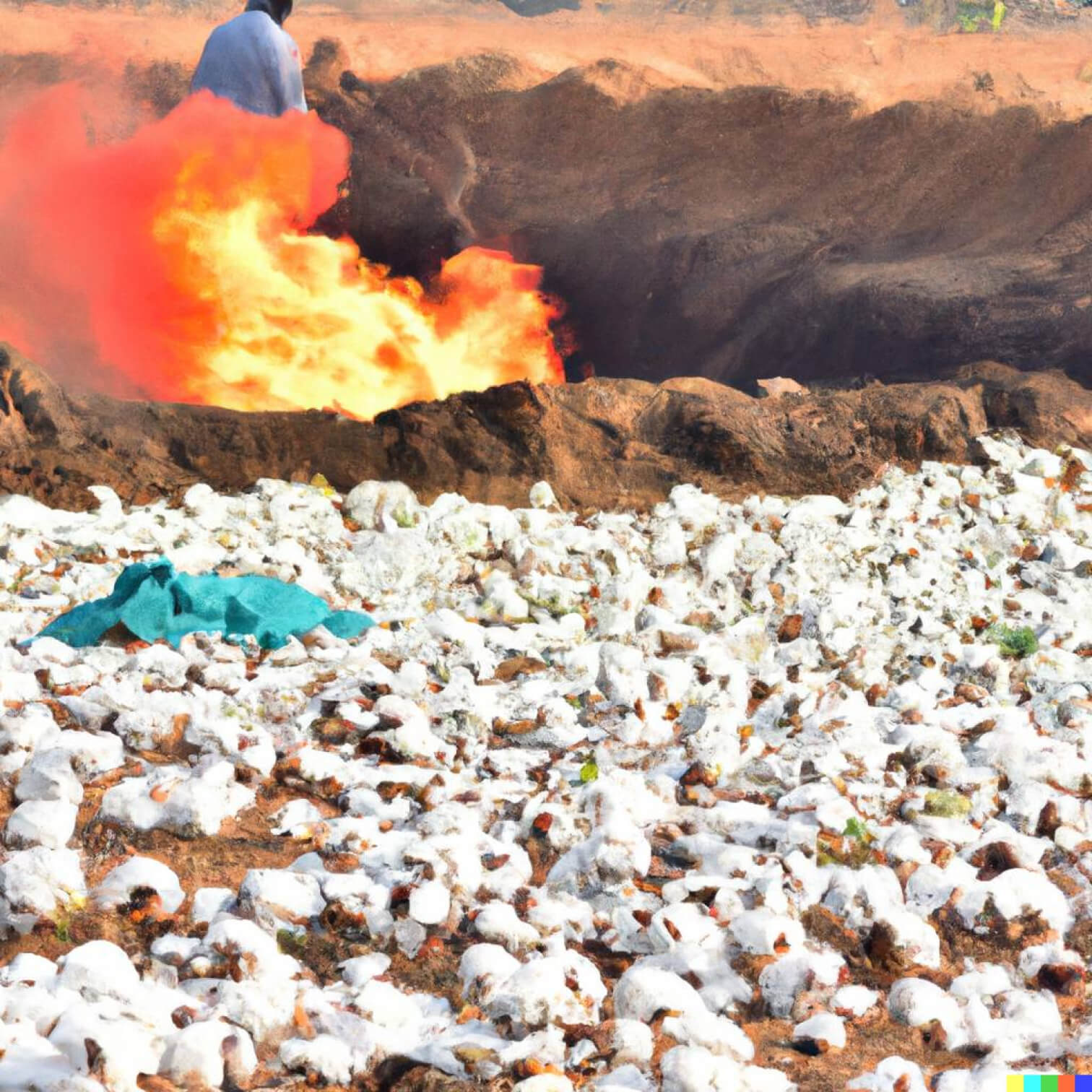
Today’s “fast fashion” industry is built on the rapid, regular consumption of essentially disposable clothes for prices that do not reflect their true environmental and social impact.
Can this system be dismantled?
Today’s “fast fashion” industry is built on the rapid, regular consumption of essentially disposable clothes for prices that do not reflect their true environmental and social impact.
Can this system be dismantled?
The Noyyal River springs from the mountains of Southwest India clear and cold, beginning the first leg of its 180-kilometer journey in a protected forest. A slender river, the Noyyal winds through farmland, past villages and cities, and eventually flows into the larger Kaveri River. But the Kaveri is not really where the Noyyal ends, because along the way, its waters run through the textile corridor of Coimbatore and Tirupur, where the river dies.
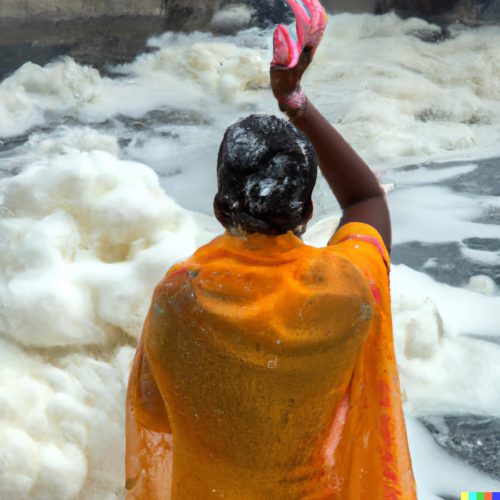
In just a few decades, chemical pollution from a bustling textile and garment industry has turned the sacred Noyyal into a toxic, foul-smelling sewer. Despite attempts by authorities to reign in the practice, many of the corridor’s dyeing and bleaching houses continue to dump wastewater directly into the river. Sometimes, the level of dangerous chemicals rises so high, the water froths, spewing white foam like a bubble bath.
Nothing lives in the Noyyal’s waters after Tirupur, and of course this cocktail of chemicals and heavy metals is unsafe to drink. Even the farmers who work the once-fertile land downstream can hardly grow anything anymore.
The nightmare of the Noyyal is not an isolated one. In 2020, Asian countries represented four of the world’s top five clothing exporters, supplying products for established brands and fast-fashion upstarts alike. And rivers across the region—in India, in China, in Bangladesh—share similar stories. All told, fashion is responsible for 20% of the world’s industrial water pollution, as well as a myriad other devastating consequences for the environment and human health.
Thanks to the environmental justice movement, public awareness around the interconnection of these impacts has begun to spread.
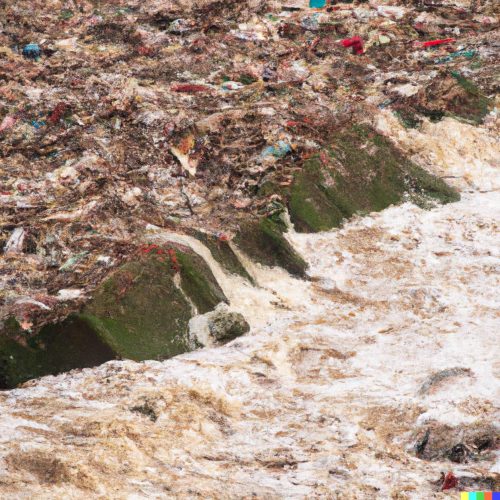
The reality is: if large numbers of a country’s people are poor and desperate for work, their government representatives can easily justify lax or under-enforced environmental laws in the name of economic growth. The corporations taking advantage of this scenario, either by moving their production to these emerging markets or sourcing their products from suppliers there, are not only getting cheaper labor, they’re cutting the cost of environmental compliance. Meanwhile, the workers and communities impacted by the resulting pollution typically have few resources and little legal recourse.

In other words, poor working conditions, environmental degradation, and the damage industrial pollution does to human health and quality of life are as interwoven as the threads of a $10 dress

In India, workers and their communities pay for today’s throw-away fashion with contaminated water and exposure to dangerous chemical pesticides, among other ills. But progress toward justice is being made, by the nonprofit organizations, entrepreneurs, farmers and workers taking aim at the false narrative of “the economy versus the environment” and striving to create an Indian fashion industry that serves all stakeholders.
India is the world’s number one producer of cotton, the most commonly used fiber in textile manufacturing. In the 1960s, the country’s “Green Revolution” ushered in the age of industrial agriculture, which emphasized scale above all else. The nature-based farming techniques practiced for millennia by farmers here, and around the globe, gave way to monoculture crops grown with mechanical equipment and synthetic pesticides and fertilizers. This increased production, but higher yields came with huge long-term costs—soil degradation, water contamination, loss of biodiversity, and the poisoning of farmers and their families.
Today, cotton is responsible for more than half of the chemical pesticides sprayed in India, according to data compiled from the country’s Department of Water Resources and the Competition Commission.
An estimated 5.8 million farmers, and 40-50 million people who work in cotton production and processing, depend on this commodity to sustain their livelihoods, according to the Central Institute for Cotton Research (CICR) in India. It puts food on the table, but the work is often dangerous, with few safety measures, low quality equipment, and a lack of protective clothing.
Excessive exposure to pesticides can cause a multitude of ailments, including nausea, skin irritation and rashes, eye irritation, loss of concentration, and dizziness. Prolonged periods of exposure can lead to life-threatening illnesses such as liver disease, bone marrow disorders, and various cancers. One study, conducted by the U.N.’s Food and Agricultural Organization, found 383 cases of cotton pesticide poisoning in three Indian villages, with 10% of those people experiencing a severe neurological disorder.
In fact, a pesticide plant in India caused what’s widely regarded as the worst industrial disaster in history. In 1984, a toxic gas leak at a Union Carbide plant in Bhopal killed thousands of people, sickened hundreds of thousands of others, and contaminated the area’s soil and water. Numerous studies conducted over the years have shown the long-term health effects of the disaster, including high rates of illnesses such as cancer and kidney disease; increases in infant mortality and miscarriage; and increased rates of chromosomal abnormalities, which cause conditions such as Down syndrome and muscular dystrophy, and neurological disorders and disabilities, such as cerebral palsy.
CHANGING
THE NARRATIVE
(PART 1)
The Bhopal disaster was a turning point for environmental awareness and legislation in India. A couple of years later, in 1986, the government passed the Environment Protection Act, creating the Ministry of Environment and Forests, which became responsible for administering and enforcing environmental laws and policies. Still, while the government committed to protect public health, forests, and wildlife on paper, policies supporting the country’s economic growth have regularly taken precedence over environmental protection, and poor or uneven enforcement of these laws has resulted in severe environmental degradation and public health risks.
In more recent years, as the environmental justice movement and social entrepreneurship have grown, people in India and across the globe have begun to challenge the commonly held belief that economic prosperity and environmental protection exist only as opposing forces.
In agriculture, the organic and nature-based (aka regenerative) farming movements are proving that eliminating chemical pesticides not only improves soil health, water quality, and biodiversity, it leads to better yields and increased profits for farmers in the long term. For example, an organic cotton program led by the World Wild-life Fund in India found that integrated pest management (IPM)—a pest prevention strategy that uses various non-chemical techniques—resulted in a 60 to 80 percent reduction in pesticide use. Farmers in this program cut their costs, boosted their yields, and saw an additional income of about $250 per hectare.
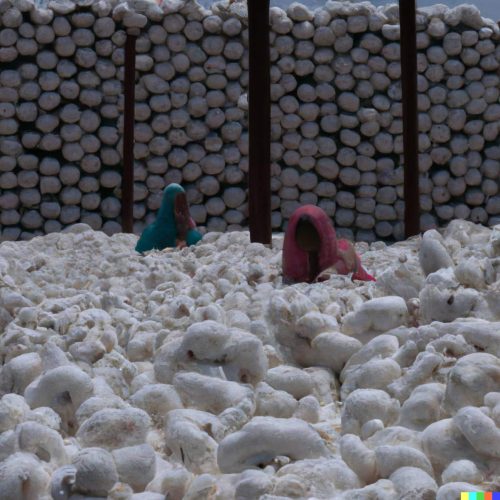
While nature-based farming represents a return to ancient methods, the transition takes time, resources and, in cases where knowledge has been lost, training. This is where organizations such as the Better Cotton Initiative come in. The BCI is a global nonprofit that partners with local groups to provide training in sustainable farming techniques to more than 2.3 million cotton farmers in 23 countries. Similarly, the Fairtrade Foundation works with farming co-operatives, businesses and governments to make sure farmers, including thousands of cotton producers in India, get paid a fair price for their goods.
The foundation’s partners in India include Chetna Organic, a cotton production and supply company established in 2004 in the state of Telangana, which now supports more than 15,000 cotton-farming families in 13 coops, and Pratima Organic Grower Group in Odisha, a coop founded in 2003 and fair-trade certified since 2010, which now has 3,500 members who cultivate around 4,500 hectares of land.
Further down the supply chain you have Oasis International, a Tamil Nadu-based manufacturer and exporter of organic cotton fabrics. And there are a growing number of Indian sustainable clothing brands that source only organically grown fair-trade cotton, including No Nasties, said to be India’s first 100% organic/fair-trade brand, founded by sustainable product development expert Apurva Kothari; Brown Boy, created by 20-something entrepreneur Prateek Kayan; and Nicobar, the slow fashion brainchild of Simran Lal and Raul Rai.
One especially interesting grassroots effort is the Oshadi Collective, founded by Nishanth Chopra, another 20-something entrepreneur who created the Oshadi sustainable clothing brand. Chopra grew up in a textile manufacturing family in the town of Erode, just 56 kilometers north of Tirupur, and he saw how the industry impacted his community. So he made it his mission to create a “seed-to-stitch” supply chain that would revive ancient Indian farming methods and partner with local artisans, who set their own terms for payment.
The Oshadi Collective’s farm sits near Erode, and the fibers are spun, naturally dyed, woven and sewn all within a ten-kilometer radius. The operation not only produces its own line of women’s clothes, it has also partnered with big name sustainable brands, such as London-based Stella McCartney and Japanese Story mfg.
Where the river ends
Roughly 90 minutes south of Erode, you’ll find Tirupur, also known as “Dollar City.” Tirupur, which has produced as much as 80% of the cotton knitwear exported from India, has become synonymous with the country’s textile industry, though it is far from the only hub.
China leads the world in textile and apparel exports by far, but fifth-ranked India—with an export turnover of $37.11 billion—is growing quickly. Currently, the textile industry contributes roughly 5% to India’s gross domestic product, 14% to industrial production, and 11% to total export earnings. The industry is also the second-largest employer in the country after agriculture, providing employment to more than 51 million people directly and 68 million people indirectly.
Industrial textile manufacturing—as opposed to clothes produced by individual artisans—first sprang up in Tirupur in the 1970s, a time when the Indian government had become concerned enough about water pollution to pass the 1974 Water Act. The act created uniform environmental standards for the country and established the Central Pollution Control Board, the agency charged with enforcing water quality regulations. The CPCB’s role was expanded in 1981 to include enforcement of regulations related to air pollution.
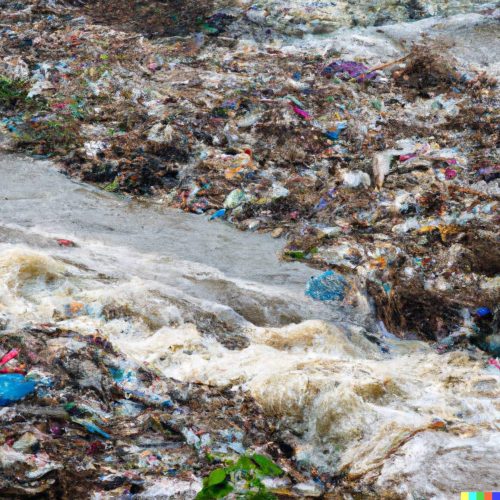
So if the environmental laws meant to curtail pollution, and the government agency charged with enforcing them, have existed for decades, why does India dominate the list of the top 10 most polluted cities in the world? Why are countless rivers across India—the Noyyal, the Bandi, the Ulhas, the Yamuna, and on the list goes—suffocating on toxic sludge?
Again, it boils down to economic growth and enforcement. Under the current system, creating and keeping jobs requires ensuring that fashion brands don’t move production to countries with even cheaper labor and fewer environmental restrictions, particularly Bangladesh. To avoid this scenario, India’s manufacturers keep production costs as low as possible, and the government routinely faces pressure to go easy with the rules. Not to mention that enforcement of environmental and labor laws often falls on the country’s 27 State Pollution Control Boards (SPCBs), which critics charge are chronically understaffed and ineffective. And spotty enforcement makes it easy for polluters to simply move from one jurisdiction to another.
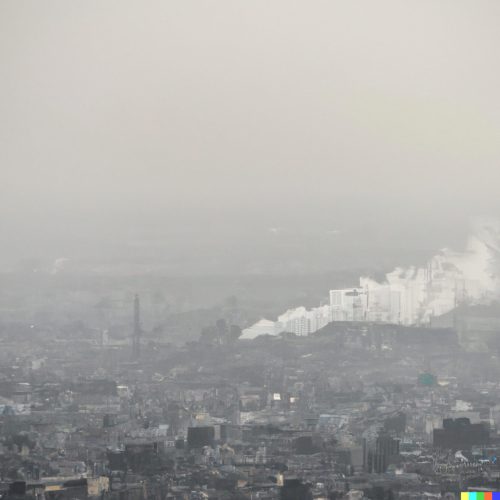
In 1996, after the SPCB in the state Tamil Nadu, where Tirupur is located, failed to stop the thousands of textile factories illegally dumping wastewater into the Noyyal, the region’s high court stepped in. The court ordered the polluting units to shut down in 1996, then followed up in 2011, with an order to treat and reuse all wastewater. This led many factories to set up their own, or shared, effluent treatment plants, which helped to lower pollution levels to some extent. However, tests continue to show dangerously high levels of contaminants as wastewater treatment has been far from universal and consistent. That’s because the added costs can be difficult to cover in an industry that runs on razor thin margins, especially for small operators, and those who adhere to environmental rules find it difficult to compete with those polluting freely. Often factory owners will simply opt to pay an occasional fine or bribe.
To this day, Tirupur residents and nearby farmers say many dyeing and bleaching units continue to illegally discharge effluents directly into the river under cover of darkness, or when it rains to dilute the smell. The farmers blamed Tirupur ’s factories for destroying their livelihoods. While they once produced a diverse collection of crops—including rice, sugarcane, cotton, tobacco, and various spices and vegetables—now, the river can only support a few crops, mainly corn to feed livestock and coconuts.
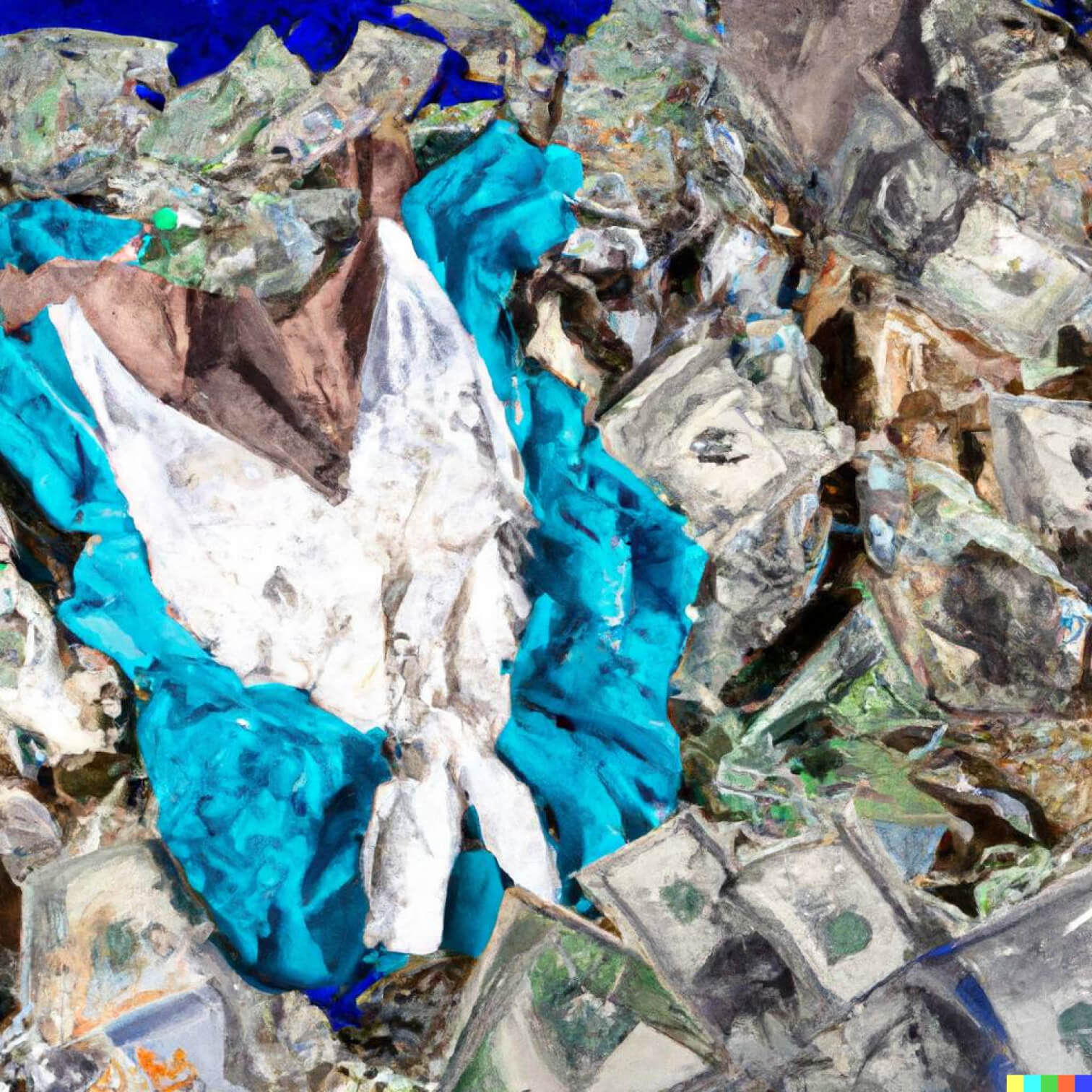
One farmer interviewed by the German news outlet DW equated sacrificing human health and the ecosystems that support life for short-term economic growth to “selling your eyes and buying a movie.” As profound as that statement is, it can be difficult for local textile manufacturers to take the long view while still working in a system built on mass producing as many cheap articles of clothing as quickly as possible. They need a clear signal from consumers and the brands that source their materials that a commitment to environmental protection does not mean sacrificing their economic well-being.

CHANGING
THE NARRATIVE
(PART 2)
In 2019, India’s Union Minister for Textiles, Smriti Zubin Irani, launched Project SU.RE, a pledge by the country’s apparel industry to set a sustainable course for itself. Project SU.RE’s five-point resolution includes a commitment to “make the right decisions about how, where, and what we source across the value chain by selecting sustainable and renewable materials and processes and ensuring their traceability.”
This may be a good sign, but a pledge does not equate taking action, and international brands need to join in the effort for it to be truly effective.
In the meantime, there are a number of sustainable brands in India using natural colors and processes to avoid chemical dying and bleaching, as well as various systems and technologies to reduce waste. Maati, founded by designer and entrepreneur Neha Kabra, works with a community in Rajasthan to create traditional Indian prints, using partially upcycled fabric and natural dyes. Pomogrenade, created by Madhulika Umapathy and Aiswarya Kutty, partners with a fair-trade production house serving disadvantaged communities in Bangalore to make clothes using surplus cotton fabric and natural dyes. And Hoomanwear, founded by vegan entrepreneur Harshil Vora, produces zero-waste, plant-based apparel dyed with certified sustainable inks.
Ultimately, consumers have the power to send a clear signal about our own commitment to environmental justice with our dollars — what and how much we buy … or don’t
Brands that promote more sustainable fashion choices often cost more, but these prices reflect the true cost of paying workers a living wage and adhering to environmental regulations. And sustainably produced pieces are typically made of higher-quality materials, so they last longer. In fact, simply buying fewer clothes and wearing them longer is one of the main steps consumers can take toward more conscious fashion consumption.
For those who’d like to learn more about what they can do, organizations such as Remake, the Slow Factory Foundation, and Fashion Revolution offer resources to educate consumers, designers, and the industry. And recent research in Nature Reviews Earth & Environment delves into the fashion industry’s complex international supply chains and proposes solutions to bring us into a cleaner fashion future.
Because degrading the planet we depend on for life, and exploiting other human beings in the process, is kind of like selling our eyes to buy tickets to a fashion show.
© bettter*data

